 Curl
Top corner
The highest-value target and the hardest to hit. Curl gives you a margin: aim outside the post and let the spin bring it in.
Experiment 05 · Finishing
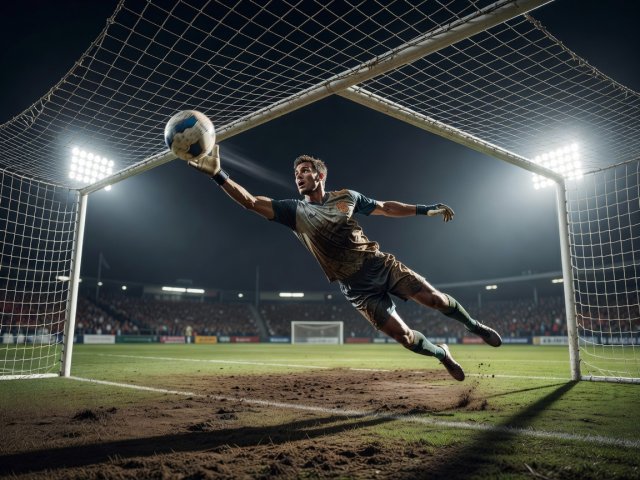
The goal is 7.32 metres wide and 2.44 metres high. The keeper fills much of it. Your job is to find the parts they cannot reach in time, and that is a geometry problem before it is a power problem.
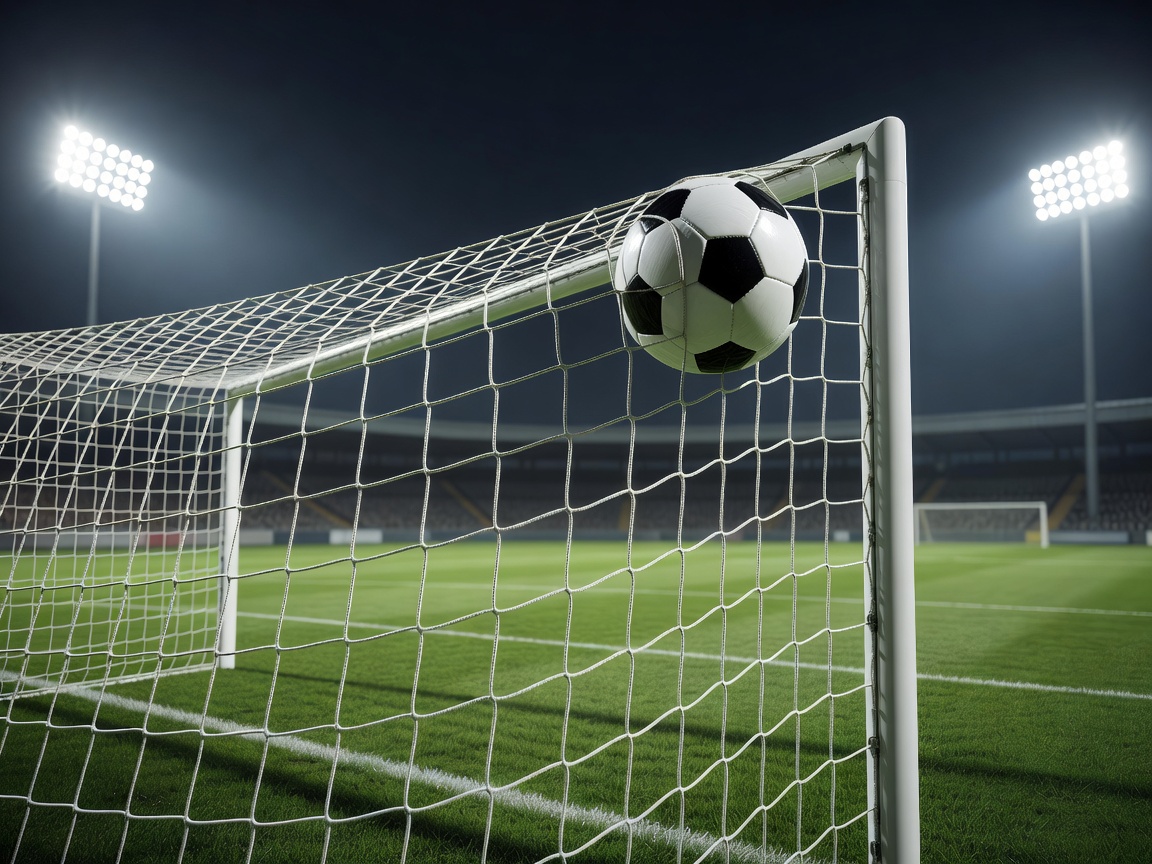
Run the numbers. A shot at 30 metres per second from 20 metres reaches the goal line in about 0.67 seconds. Human reaction time to a visual cue is commonly put at around 0.2 seconds, and a full-stretch dive takes most of the rest. A keeper starting near the centre can cover the middle two-thirds of the goal in that window. The final metre inside each post, especially high or very low, is where they arrive late.
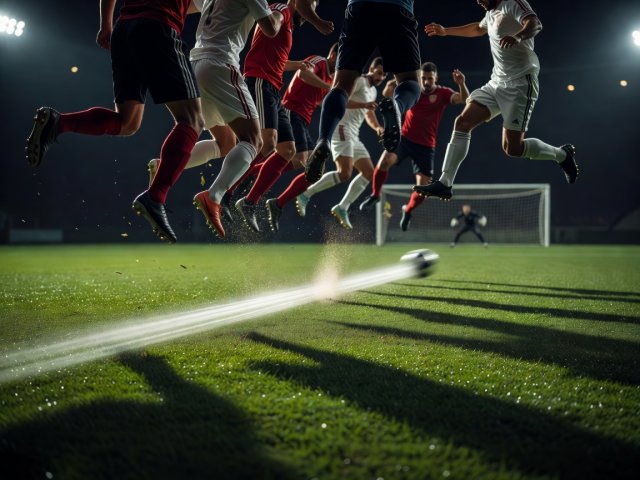
Now consider a free kick. The wall hides the moment of contact, so the keeper's clock starts later, often when the ball reappears above or beside the wall. That lost tenth of a second is why curl round the wall and dip over it are so effective. The ball becomes visible already heading for a corner.
Adding 10 percent more speed saves perhaps 0.06 seconds. Moving the target 50 centimetres closer to the post can buy far more. Placement is the cheaper upgrade.
CurlThe highest-value target and the hardest to hit. Curl gives you a margin: aim outside the post and let the spin bring it in.
 Power
Under a jumping wall or into the bottom corner. Keepers find low balls slow to reach because they must drop as well as move sideways. Lionel Messi scored several free kicks this way.
 Curl
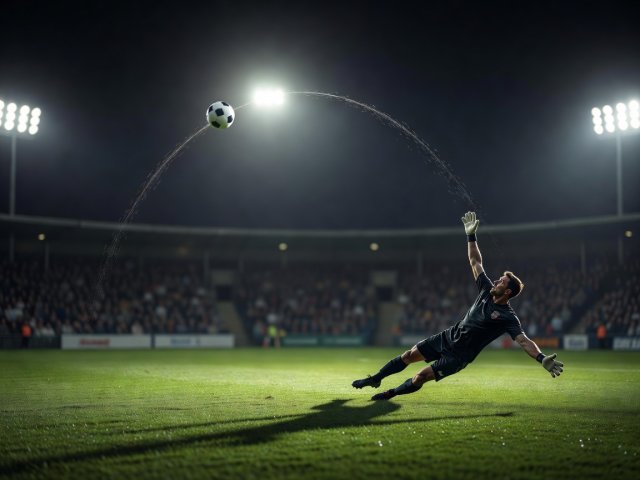
Backspin from a scooping contact under the ball. Antonín Panenka's dinked penalty in the 1976 European final in Belgrade remains the boldest example.
| Zone | Keeper difficulty | Shooter risk | Best strike |
|---|---|---|---|
| Top corner, far post | Very high | High: over the bar or wide | Dip curl |
| Top corner, near post | High | High: keeper's side | Power or knuckle |
| Bottom corner | High | Medium: wall legs | Low drive |
| Under the wall | Medium to high | Medium: player lying behind wall | Low drive |
| Central, at height | Low | Low | Knuckle only, hoping for movement |
Direct free kicks are converted far less often than fans assume; the figures usually quoted for top leagues sit in single-digit percentages. A smart choice of zone is how specialists push their own rate above that.